All posts by Natalie Kleinman

Elaine Everest – Gone but not forgotten

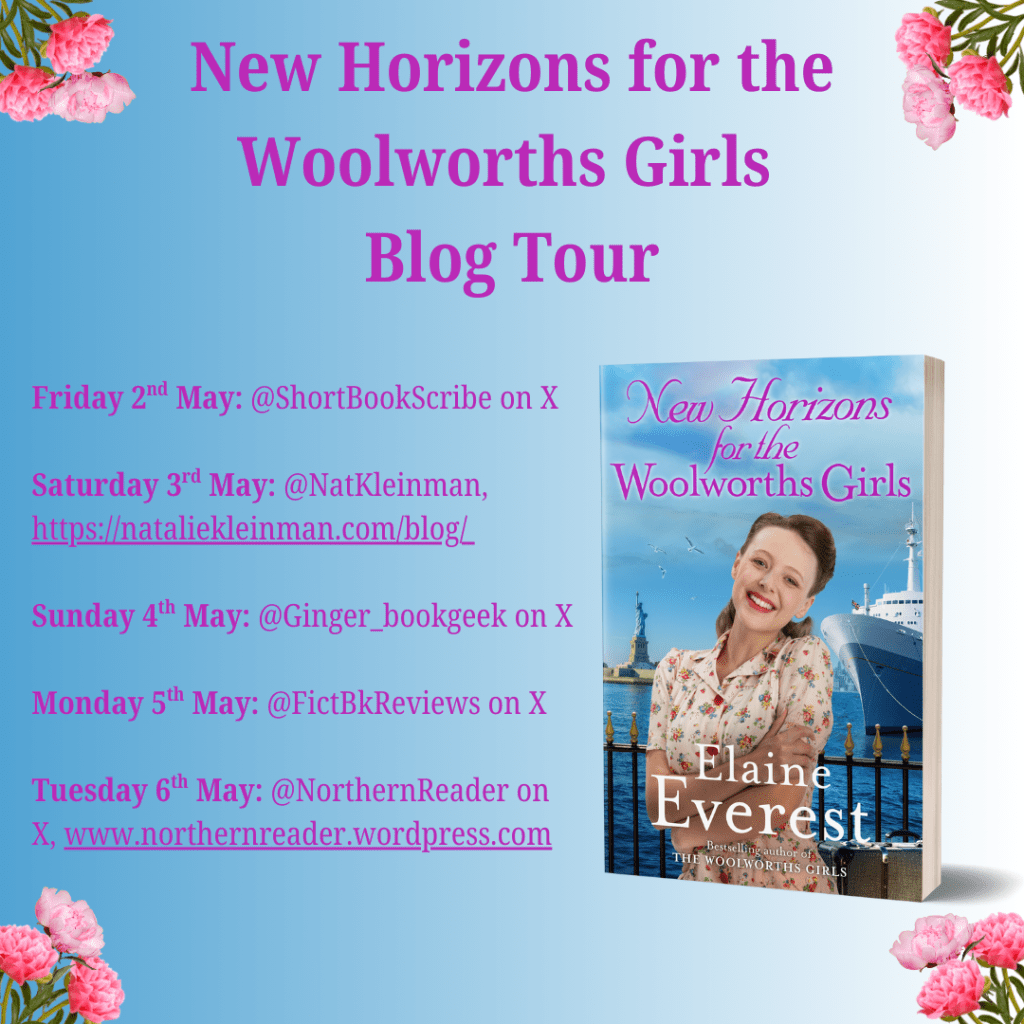
As I write this, I have just finished reading Elaine’s last book, New Horizons for the Woolworths Girls. We have a new cast of characters, with many of the old ones taking a back seat or more minor parts than previously. I wonder if any of them argued with Elaine when she was writing. From my own experience I know they have a habit sometimes of trying to take over. This time our heroine is Annie Brookes and we move from Woolworths Erith to Bexleyheath. The period covered is February 1940 to June 1946. Yes, pretty significant, as once again Elaine takes us through the war years.

Annie is thrown a curved ball when she is called upon to raise her goddaughter as her own but, with the support of her family, little Ivy Rose is surrounded with love and Annie manages to keep working in the job she loves so much. There are some Americans based at Hall Place in Bexley – just up the road and a place I visited myself only last week as it’s local to me. A beautiful building with lovely grounds and a walk along the River Cray. Having taken a dislike to the Yanks for reasons which will become apparent when you read the book, she then meets one who is charming and wins her over. However… well, if I tell you that, I’d be giving far too much away. Suffice it to say that Elaine has worked her magic again and given us a great story. I’m only sorry she isn’t here to receive the praise I know she will receive for another splendid book in this wonderful series.

Elaine’s friend (and mine) Vivien Brown has written a eulogy which appears at the end of the book. She was kind enough to quote something I’d written and I’m copying it here:

Elaine was a force of nature, outspoken in her opinions and ready to stand by them even when they were controversial, but she would be there front and centre if you needed her. I’ve never known anyone give so much of themselves to other people.

I wrote this after Elaine died last August. She was larger than life and her death does not diminish that. I’m proud to have been her friend.

Amazon: https://amzn.to/3SgkLI9

Another Triumph for Elaine Everest

As my followers will know, this post would normally be entitled ‘Chatting With…Elaine Everest’. It was a huge personal blow and a devastating loss to all her friends and followers when we learned of her passing in August. However, we are blessed indeed that Elaine has left us a huge legacy in her books. So, with no builders’ tea and biscuits to share with her, I give you my thoughts on A Christmas Wish at Woolworths.

In A Christmas Wish at Woolworths, Elaine takes us back to Erith and her huge cast of characters. It’s 1953 and Sarah, Maisie and Freda have come a long way since we first met them in the late 1930s. There are the usual bad eggs – we learn very early on that Gloria needs watching very closely – and the threat of closure to the beloved Erith branch of Woolworths. Maisie has moved upmarket and her new neighbour doesn’t consider her and her family posh enough. She’s a curtain twitcher and a troublemaker.

There are so many characters and threads running through this book but, due to Elaine’s talent, we never lose our way. As ever, the attention to detail and the links that Elaine had with Erith bring us to a joyful ending at Christmas and a very personal nod to Elaine herself, as you will see if you read her letter and reference to the Hainault Maternity Home at the end of the book.

There are eleven books in this series, the last will be published in 2025. Elaine has taken us on a journey and I, for one, have come to love her characters. I can only recommend A Christmas Wish at Woolworths as I have all those that came before.

Thank you, my friend, for giving me and your loyal readers a world so real that I can’t believe the characters came from your imagination. That said, I know some of them are based in real life. Rest in peace, Elaine. Your books are your legacy and I thank you for it.

Natalie

Amazon: https://bit.ly/3XVBSS8

Chatting (Again) with Elaine Everest

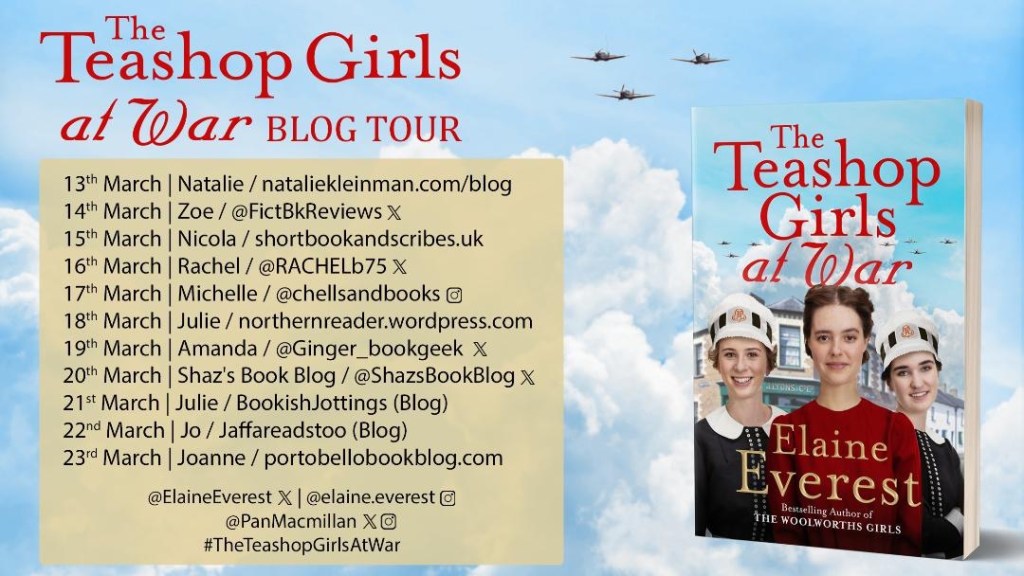
Welcome, Elaine, and make yourself at home. You know where everything is. Here’s your tea. Yes, of course builders tea. I know how you like it. So, let’s talk about your latest Teashop Girls book, out for publication in paperback and ebook tomorrow.

Well, you certainly hit the ground running with this one! I love a prologue. It’s a mechanism I know you’ve used before. Is that always going to be the case now, and why?

Hello again, Natalie!

Thank you so much for hosting me; it is now a tradition that I visit your blog for a chat with each book. I’ve brought along cream eclairs to have with our tea.

I love reading prologues as they tend to add to the tension and intrigue in a new story. I love reading prologues as they tend to add to the tension and intrigue in a new story. Although prologues can give a secret from the past my favourites are the ones set in the future that give a nibble of what will happen – without giving away the plot. 

Who can resist an éclair? Thank you very much.

The Teashop Girls at War has a huge cast and every one of them is different. I know you keep notes and that many have appeared in previous books, but can you tell us again how you manage to maintain so many different personalities.

My characters seem to multiply before my eyes! I’m wary of moving to the next book in a series and not have an old character that is much loved by readers not appear. I would soon be receiving irate emails. Apart from that I too want to know what they are up to. With each of my series I started with three friends, but they have families, colleagues, and then husbands appear. Yes, one or two will be centre stage, but the others will be around to lend a helping hand. I could never write a series with different characters in each book as that just wouldn’t happen in real life – and my stories are about people in realistic situations. If you walk into the Lyons teashop in Margate during the war you would expect to see the girls working there – unless they were off on a secret mission…

It was interesting to see Tom again. Not a nice man but a very good plotline. Did it present itself or did you have to ‘look’ for it?

At one point I felt sorry for Tom, but then he did something so awful I decided he needed to have his come uppance. Lily has always thought that one day Tom would appear and tap on her on the shoulder then proceed to make her life hell. Thank goodness for her friends who were there to help; especially when his dastardly deed misfired.

You gave us many hints along the way but in spite of that I was surprised at Mildred’s role (I don’t want to give any spoilers). Anya’s part throughout was more overt but nevertheless constantly evolving and really interesting. Can you expand and compare (also without spoilers) or have I given you an impossible task?

As soon as Mildred walked into my first book in her wellies and oily overalls, I just knew she would have hidden depths and would be a friend to depend on at all costs. What happens in the future with Mildred will be interesting. Anya’s task was more straightforward as all she wants is to have Henio home and will do anything to make that happen whereas Mildred is simply serving her country to bring about an early end to the war…

I love that you use Henry’s pedigree name for one of your characters. Aside from your beloved Polish Lowland Sheepdog – the Polish connection didn’t escape me either – are there others who are based on people you know?

Owning our Polish Lowland Sheepdog, Henry has introduced us to many lovely Polish people as well as fans of the breed from other countries. Henry has his twelfth birthday in September so no longer attends shows but we meet everyone on social media. Being bred in France from Polish decent means Henry’s pedigree name and that of his ancestors gives a nod to the past. The Polish version of Henry is Henio – a perfect name for Anya’s brave husband.

Have I used names of other people I know? No, not really although I have used many of my dogs’ pet names in other books and a lovely lady named Rita Binks was a character in The Patchwork Girls after her daughter-in-law won a competition to be a character in my book and she gave the place to Rita.

As for other characters – that would be telling…

Thank you for the reminders about our trips to Ramsgate in your letter at the end. We had some good times, didn’t we. My next question is, of course, what else do you have in store for us?

We must return to Ramsgate for another writing retreat as it feels an age since we all got together. They were good times.

What’s next? We are back at Woolworths in October for A Christmas Wish at Woolworths. All I will say is never trust your neighbours!

Currently I’m writing another Woolworths book set in WW2 – yes, some of our regular characters will make an appearance.

Another trip to Ramsgate sounds wonderful.

It’s been a pleasure as always, Elaine. Thank you for joining me. 

Thank you so much, Natalie.

Elaine xx

Links:

Website and newsletter: www.elaineeverest@aol.com

Twitter/X: @elaine.everest

Facebook Author Page: www.facebook.com/ElaineEverestAuthor

Instagram: elaine.everest

Chatting with Elaine Everest

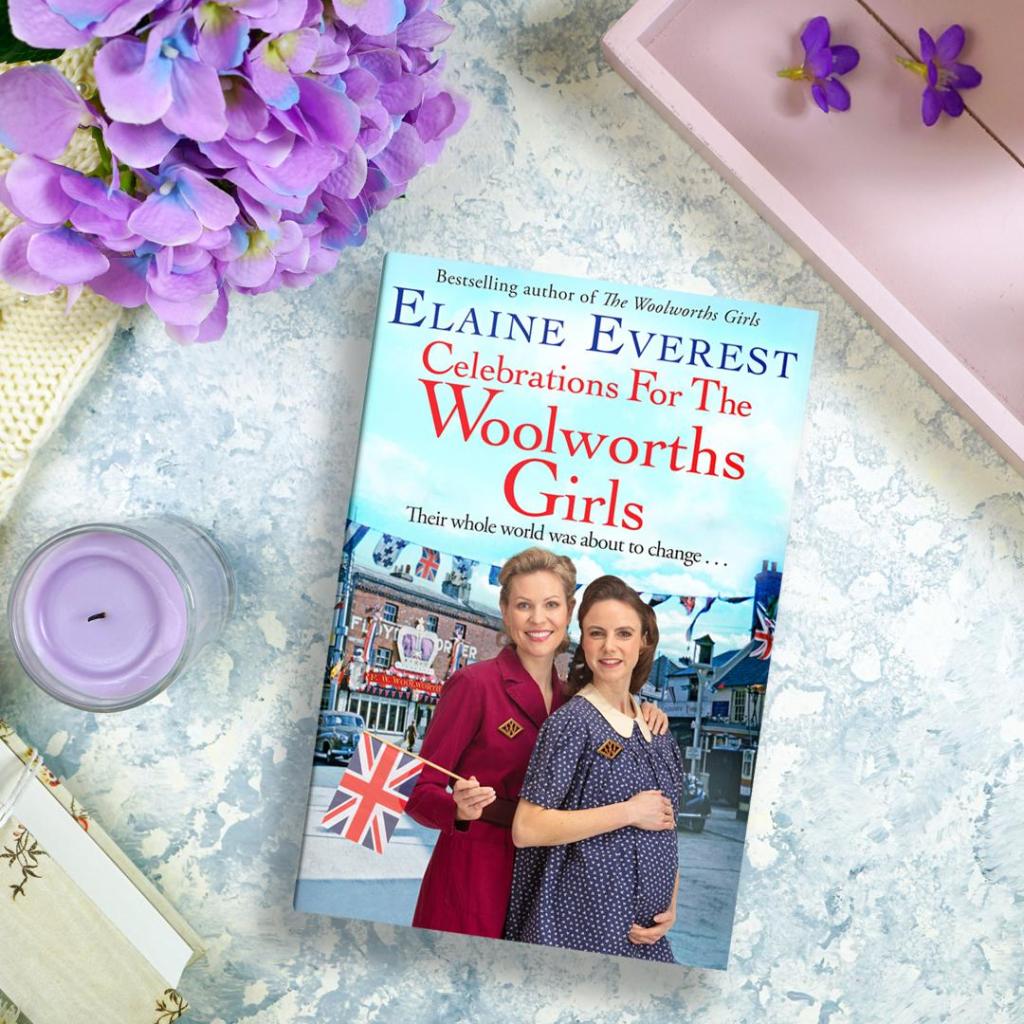
Here I am again, talking with Elaine Everest about her latest in The Woolworths series, Celebrations for The Woolworths Girls. So, as I hand her a cup of builders’ tea, let’s find out a little more.

Welcome, Elaine. Help yourself to biscuits.

Hello again, Natalie. It is so nice of you to invite me for tea and a chat.

As far as I’m concerned, this book, despite some harrowing incidents and disturbing social issues, really is a celebration. I’d anticipated that it would take me some time to read – your books are not short – but it’s another un-put-down-able one and I absolutely whizzed through it. I’m certain though that you didn’t whizz through the writing. How long did it take you to write, and can you divide that up into research and actual writing or do they go hand in hand?

Thank you! I did have to remind myself at times that the title included the word ‘celebration!’ I knew I wanted to include certain events that happened during the span of the book as well as relationships between family and friends.  As you know I like to plan my books but these days knowing my characters so well my planning is more a list of what needs to happen both emotionally and historically. I start with a timeline and fill the gap between the date at the start of the book and the day the story ends. Research seems to be continuous for the Woolworths series, but for the process of writing a book I would give myself two months to research and four months to write. At the moment I have a book published every six months so must keep to my publisher’s deadlines. Just to add that while I’m researching one book, I may still be writing another and planning a third so my writing life is not set in stone.

One thing that is always apparent in your books is the attention to detail and the accuracy of your depiction of actual historical events. How important is this aspect to you as a writer or is it something you enjoy on a personal level as well?

As a writer of historical fiction, I’m paranoid about getting facts correct. I also like to use major events in the time period to bring interest to the story. Saying that I’m not one for listing products and bogging down the reader with too much daily detail. I respect my readers for having their own knowledge of the era I’m covering. Now the Woolworths series is in the 1950s many readers were either there (as children) or grew up listening to their family talking about that time.

I was struck by the number of characters taking part. You have a huge cast, but this has built up over the years throughout the series and, as always, it was like meeting old friends. There was no flicking back through the pages to see who was who. I must say, I still have a huge soft spot for Maisie. How do you keep track of them and their lives?

I adore Maisie, in fact she features strongly in the book I’m currently writing for Autumn 2024 and as usual will get herself into a few scrapes.

Although I know I should let a few of my main characters take a back seat in some books I’m aware loyal readers want to know what they are up to and will be messaging me to ask. It is a thin line I tread! Also, we have the younger members of the cast growing older and making an impression in the story. Do they also work at Woolies or somewhere else?

I see you couldn’t resist mentioning Nelson and it took me straight back to the Anderson shelter. I know dogs have always been such a huge part of your life and it’s lovely when you include them in your writing.

My dogs are the reason I became a writer as way back in 1997 I took the decision to concentrate on my writing and stop working for a bunch of bullies – that’s a novel in itself and yes, some memories of that time in my life have been used in my stories. I do change names.

I featured a dog kennels The Patchwork Girls and it was enjoyable to research (and pick my brains) on dogs and breeders during the war years. For fifty years I’ve read books on my favorites breed and known some remarkable people who devote their life to Old English Sheepdogs (other breeds are mentioned) to the point I know the sport. I hope in future to write more about the world of dogs.

Without giving anything away, I was mightily impressed with the way you resolved the ‘housing situation’. I’m assuming this was something that was planned in the very early stages.

Woolworths, Erith, in bygone days

Yes, it was, and I’ve always been aware that Sarah dreamed of her house with ‘roses around the door’. Saying that, she still has her problems and worries. I know the houses where many of the characters live so can work out who sleep where and when the ‘outside lavvies’ moved indoors. In Alexandra Road I like to put my characters into houses I knew when I lived there so certain numbers pop up again and again.
The road Maisie moves to towards the end of ‘Celebrations’ is one I still check on Rightmove, but these days they cost an arm and a leg, plus Erith has changed so much it is not the town I knew and loved. Personally, I’d like to move back to number 13, Alexandra Road but during the war years as I know the house survived!

I think ‘Celebrations’ may well be my favorite book so far, but I probably say that every time. However, I know you won’t have been idle since you submitted it to Pan Macmillan. What’s next for us to look forward to.

Thank you, I’m so pleased you enjoyed the story. This book was submitted during 2022 and since then I have written The Teashop Girls at War which takes us back to the Kent coast and the story of the Nippies. It was interesting to write and my research in the SOE brought another interesting angle to the book. Some of the girls had a romping adventure!

Currently I’m finishing another Woolies book for Christmas 2024 and already planning another story. I’ll remain silent on what it is…

It’s been a joy as always. Fancy another cup of tea before you go?

Thank you so much for the delightful chat. I’ve love another cup of tea. Are there any Hobnobs left? Xx

Sorry, no. We seem to have worked our way through the lot!

Links:

Website/blog/newsletter: www.elaineeverest.com

Facebook author page: https://www.facebook.com/ElaineEverestAuthor

Twitter/X: @ElaineEverest

Instagram/Threads: elaine.everest

Amazon link: https://www.amazon.co.uk/dp/1035020602/

Long Time No See

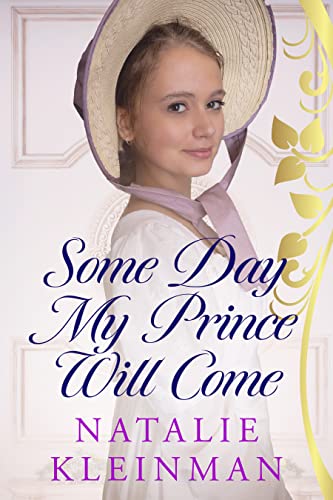
It’s been a long time since I posted, and that’s an understatement to say the very least. I have, in fact, had another book published since you last saw me here, my seventh with Sapere Books and a follow-on, though completely stand-alone, from The Wishing Well. As always, Sapere have produced a beautiful cover. What do you think?

Some Day My Prince Will Come returns to the Ware family, only this time the main protagonist is Rebecca. You may remember from The Wishing Well that life pretty much fell apart for her and Some Day begins a while later when she has in some part recovered from her terrible ordeal and is ready to enter Society again. She’s still looking for her prince but, a little older and perhaps a little wiser too, she is perhaps more realistic as to her prospects of finding him. Onto the scene come Comte Hugo du Berge. Not a prince and French to boot but willy-nilly Becca falls in love with him. Hugo is carrying his own baggage and, while he too falls deeply in love (I don’t think I’m giving too much away here) he cannot commit to Rebecca until he can resolve the tragic mystery of his past – in France! So off he goes, leaving poor Becca wondering if she’s fallen in love with a man she will never see again. Here’s the link if you’d like to see more: https://viewbook.at/SomeDayMyPrince

I’m currently working on something entirely different which in itself will remain a mystery until further down the line. I won’t tease you, but suffice it to say it is not another Regency. I know. I know.

It’s been such a strange few weeks, weather-wise, that it’s been a bit of an escape to dive into my writing world. Much of July and certainly the beginning of August has been disappointing – another understatement – though I don’t think I would have changed places with those on the Continent having to contend with the effects of the heatwave they’ve been experiencing.

Well, I think that’s all for the present but here’s a banner I made for all my Regencies. Pretty, isn’t it.

See you next time.

Much love.

Natalie

Chatting with Elaine Everest

It is as always a pleasure to welcome Elaine Everest for tea and a chat. Today we’ll be talking about her latest in the fabulous ‘Woolworths Girls’ series. Here we go then.

It’s lovely to see you again, Elaine. You’ve been a very busy lady since we last met. I have to say, I was delighted to read Betty’s backstory and, without giving anything away, she wasn’t at all what I’d expected. What she does have in abundance, what all your female characters have, is grit. How do you go back and formulate a character decades after she (or he) first appeared in one of your books?

Thank you so much for inviting me to your blog, Natalie. It is always a special place to stop as you provide tea and cake!

Between you and me I do worry about going back in time to show more of a character’s past life. What if the lovely readers have a different view about the character before they appeared in my books; I’d hate to disappoint them.

The two characters I have written about so far, Betty Billington and Ruby Caselton are like old friends to me after all this time; I feel as though I know them inside and out. It has been a joy to visit them as young women and steer them towards that time in 1938 when we meet them for the first time. In Betty’s case we knew she’ lost the love of her life during WW1 and I was able to show him in ‘real life’ along with his family.

Something that is always in evidence in your writing is the amount of research you do in preparation. We only see the tip of the iceberg but there’s never any doubt that you have a wealth of information we are not party to. How do you decide what to put in and what to leave out, and how much?

A saga author friend always says how the research and the history is just the wallpaper to our books and I tend to agree. A lot of the time writers don’t need to throw every piece of history into a scene. It is imperative we know the setting and what is happening in the outside world, but we only need to drip it into the story. Better to have characters talking about something rather than stopping the pace of the scene to ‘info dump’ in order to educate a reader. I once had a young character some up with an interesting snippet about the war. When her friends asked what happened next her reply was ‘I only had the one page of the newspaper wrapping my chips.’ That is how some people view information – it is their life which is of more interest to a reader.

I love the chips in newspaper!

You keep your readers guessing right to the end but of course you know exactly what’s coming. I suspect this is down to very careful planning. Can you share some of your secrets with us?

Yes, I do plan my books in that I know what is going to happen to each character and how their story will end. I must do this in order to have the idea accepted by my editor at Pan Macmillan. However, as you know, I can and do change what may happen to a character. There are two who should have died, but I changed my mind!

Gracious, where have my manners gone abegging? Would you like some more tea? It’s been in the pot for a while now so it should be just as you like it. Builders!
Perfect!

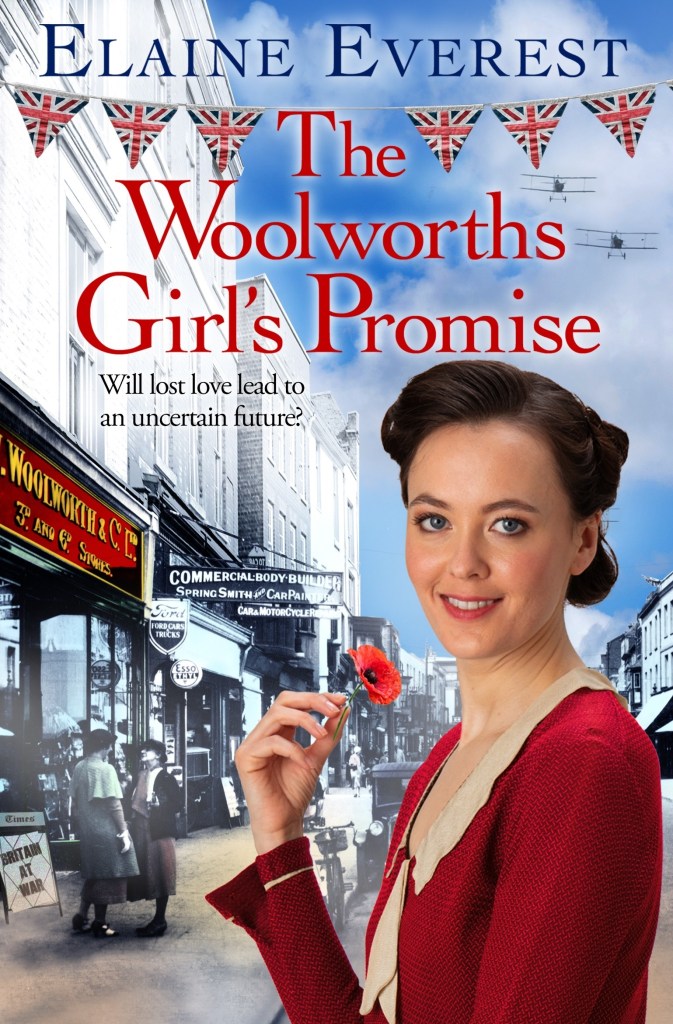
I’m aware that you’ve written more books since you submitted The Woolworths Girl’s Promise. Are there more to come in this wonderful series? What else do you have in store for us?

I recently filed, Celebrations for the Woolworths Girls with my editor and hopefully it will be accepted and published in the Autumn. At the moment I’m writing another Teashop Girls book, which is the third in the series. I’m enjoying revisiting the Nippies and their families on the Kent coast during WW2 and have lots in store for them before I write the final page.

Your work ethic is unquestionable, but all work and no play would be very dull. How to you make time for yourself and what sort of thing do you do when you have?

Thank you for saying so, but I do feel our writing lives have changed so much since the dreaded Covid reared its ugly head. Like everyone else. not going out as much meant I had to find something else to tear me away from the laptop. Thanks to writing The Patchwork Girls my interest in sewing has been reignited. I’ve indulged in reading craft publications and purchasing fabric and sewing gadgets. Have I made much? The answer is no, but I’ve enjoyed the experience. I’ve also read more than I’ve ever read in my life and that has continued since.
Along with my husband I’ve spent many hours planning trips across the Continent by train – a feat in itself at times. It was on one journey last summer Covid caught up with me. I should have stayed at home!

It’s been a real joy, Elaine, as ever. I thoroughly enjoyed Betty’s story and can’t wait to see what you have in store for us next. All power to your pen! Or your keyboard. Or whatever you use. See you next time.

Thank you, Natalie, and good luck with your own book, The Wishing Well. I can’t wait for it to arrive on my Kindle. xx

Links:

Website: www.elaineeverest.com

Amazon:  

Twitter: @ElaineEverest

The Wishing Well

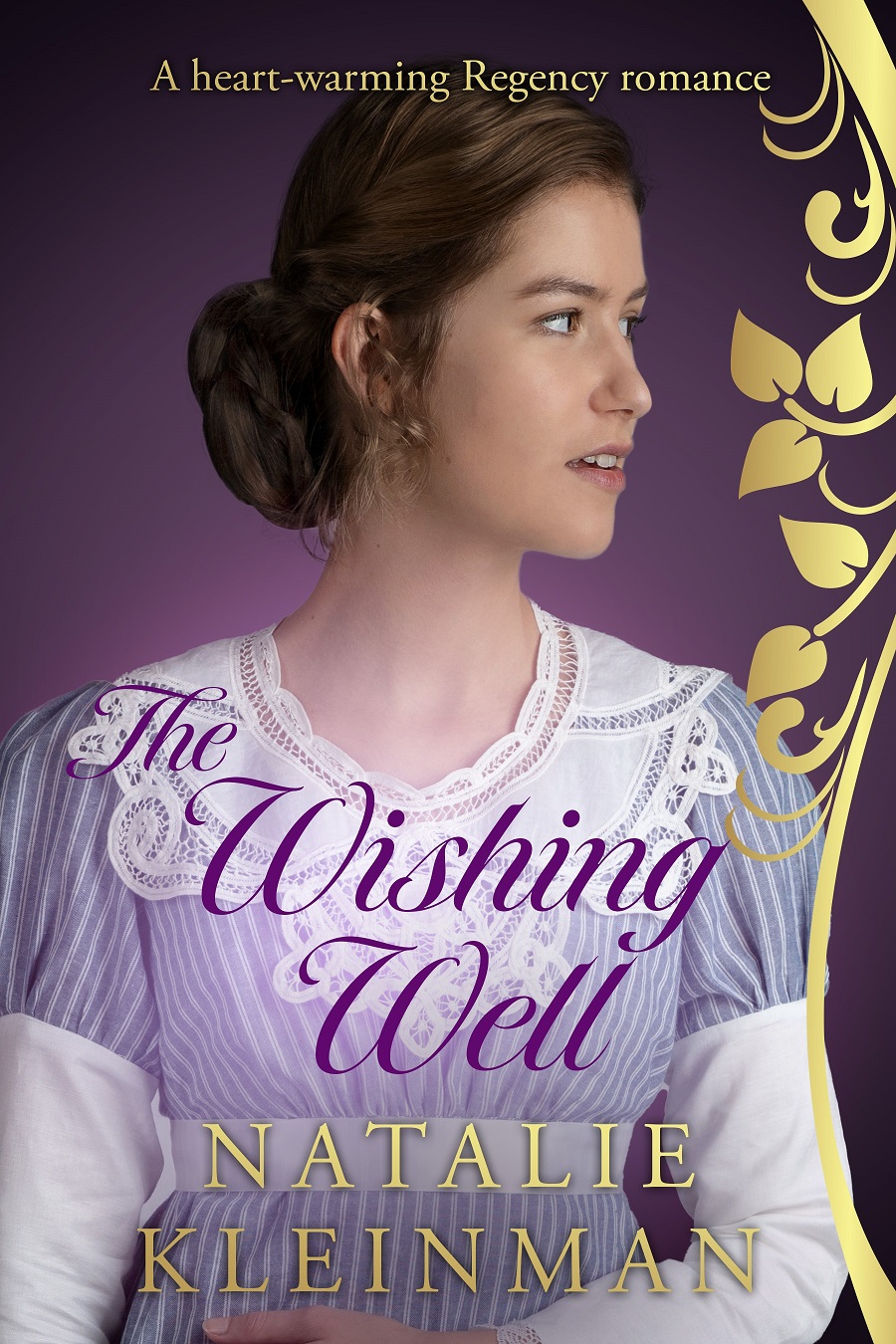
It’s been a long time, I know, but I’ve had to take a year off due to personal circumstances. But hey, I’m back now, and with the great news that I have another book on its way. It’s due to be published on 5th May but if you’re super-organised and would like to ensure you get your copy on time you can pre-order The Wishing Well by clicking on this link.

Once again my publishers, https://saperebooks.com/, have come up with the most fabulous cover. Isn’t it gorgeous?

Both hero and heroine are the victims of tragic circumstances from which neither has yet recovered. I’m not giving too much away when I tell you that Major Brew Ware has carried his guilt since childhood, believing himself to be responsible for the death of his youngest sister. Estranged from his family, he fled home as soon as he was old enough to join the army and led his men at the Battle of Waterloo. Harriet Lambert’s fiancé was a victim of that very same battle and, three years later, she is still mourning her loss. Our story begins in 1818 when both come to London and meet at a soirée, where they form an immediate connection. Their friendship flourishes but is Harriet prepared to take another chance on love…

This is my sixth book with Sapere (there’ll be another one along soon) written in my favourite genre and what a joy it has been to steep myself once more in the etiquette and language of the Regency era.

I’ll be back soon to tell you more. In the meantime why not visit my Amazon Author Page where you’ll find my other books.

See you next time

Natalie

Chatting with Elaine Everest (again!)

You can’t keep a good writer down and Elaine is with me once again to talk about her latest book in the Woolies series, The Woolworths Saturday Girls

Welcome, Elaine. I’ll just slide the plate of biscuits towards you as I’m trying to cut down. Builders’ tea isn’t it?
Thank you for inviting me to your blog. No biscuits for me as I’m no longer allowed to eat them (sobs). Builders’ tea would be lovely.

I had thought it would be difficult to shift my focus from Sarah, Maisie, and Freda to the next generation, but the Saturday girls won me over in no time. Bessie, Claudette, Clemmie and Dorothy work so well as a group, perhaps because they are all so different. Were they fully formed characters when you began to write or did they develop as you wrote their story?

Thank you for finding the transition from the mothers we know so well to their daughters so easy. I’ve been worried readers wouldn’t accept them after following the ‘older girls’ for so long. ‘I’ve known these four girls since they appeared in earlier books with both sets of sisters having traumatic times in their childhood. They’ve been in the background of every book since then; they may not have played a part in the stories, but I’ve been aware of their presence. It is a delight to finally allow them to have their own book.

Margaret Roberts! What a gift. Something you were aware of, or did you come across her during the course of your research?

Coming from the area I’ve known the story of Margaret Roberts part in our local history. She met Dennis Thatcher in Erith at a dance, in the same venue that’s feature in chapter one. The rest is history!

To be honest, I was dreading that something awful might have happened to Ruby, so I was very pleasantly surprised when not only did she put in an appearance but was as ever the wise matriarch of her family. In my opinion, a Woolworths book wouldn’t be a Woolworths book without Ruby Caselton. Are there any characters you just can’t let go of?

I have to confess that Ruby’s age is beginning to worry me. She reaches the age of seventy in this book. I may just have her receive a card from the Queen on her one hundredth birthday. That would save me from readers complaining if something awful happened to her and she will have a few books to go yet…

Tom Andrews is a real piece of work. How do you get inside the head of your villains – and do you enjoy doing so?

I love a villain. To be honest they come easily to me, and no I don’t mix with villains haha!

For writers it is easy to slip into the head of a ‘baddy’ these days what with social media. I only have to look at local forums on Facebook or read comments under articles in our national newspapers to spot a cocky attitude and someone who swims against the tide of decency, to know they would suit one of my characters.

A lovely nod back to The Butlins Girls (I love that book) and the era of the seaside holiday camp. Where did you spend your own childhood holidays if you don’t mind me asking?

For my family it was seaside guest houses in Ramsgate and the Isle of Wight before Mum discovered Warner’s Holiday camps and we visited them until the summer before she passed away. No overseas holiday for us, but then not many families travelled abroad in the fifties and sixties. Dad spent his conscription in Rhodesia and Mum had ideas for us kids to go on school trips oversees. Her dream was to visit Canada one day, but it never happened. Luckily for me I was able to visit Switzerland with my school when I was fourteen. As you know it is somewhere I now like to visit whenever I can. Hmm perhaps ‘The Woolworths Girls visit Grindelwald?’ it does have a certain ring to it.

Nice also to meet Flora Neville again and to revisit the Sea View Guest House. We expect characters from your earlier books to put in an appearance but including one from The Teashop Girls was a nice surprise. Might we see another book in that series or is it just your love of Ramsgate?

I thought it would be fun to reintroduce Sea View and Flora to one of my stories. Yes, I will return to the Teashop Girls for a third book before too long. Ramsgate played such a big part in WW2 history that it would be remiss of me not to see the girls through to 1945 especially as readers keep asking for an update. I do have an interesting outline for book three…

There’s no doubt that your readers relate to your characters and have their own favourites. I know I do. But what’s coming next? Something completely different or will you be returning to one of your much-loved cast and, if so, which one?

As you know my writing has slowed down in recent months due to a problem with my eyes. I’m now writing again, albeit not spending as much time on the laptop as I would like as I’m obeying my consultant as much as possible. However, there is another book in the pipeline and I’m returning to Woolworths to tell the story of our Betty Billington’s early days. It will be called A Woolworths Girl’s Promise so watch this space!

It’s been lovely talking to you, Elaine, though once again I’ve eaten far too many biscuits. I hope you’ll join me again next time.

Thank you so much, Natalie. Perhaps I will have one of those biscuits after all! xx

ABOUT ELAINE EVEREST:

Elaine Everest is the author of bestselling historical sagas including The Woolworths Girls, The Butlins Girls, Christmas at Woolworths and The Teashop Girls. She was born and raised in North-West Kent, where her much-loved Woolworths series is set, and worked as a Woolworths Saturday Girl herself in the late 1960s/early 1970s.

Elaine has been a freelance writer for 25 years and has written over 100 short stories and serials for the women’s magazine market. She is also the author of a number of popular non-fiction books for dog owners.

When she isn’t writing, Elaine runs The Write Place creative writing school in Hextable, Kent. She now lives in Swanley with her husband, Michael and their Polish Lowland Sheepdog, Henry.

Links:

Website and blog: www.elaineeverest.com

Facebook author page: Elaine Everest | Facebook

Twitter: @ElaineEverest

Amazon author page: Amazon.co.uk : elaine everest books

Remembering Rosemary Goodacre

Rosemary Goodacre

Those of us who have put together the short story competition in memory of our friend, Rosemary Goodacre, wanted to share with you a few of our thoughts and memories of a very special lady. Entry details can be found below our comments and all proceeds will go to her favourite charity, Spadework, which supports its beneficiaries (adults with learning and other disabilities) to be more independent, less isolated and to live happier, healthier, and more fulfilling lives. We hope you will feel inspired to take part.

Elaine Everest

Rosemary was a very special friend. We met in the staff room at Gravesend Adult education centre where I was teaching creative writing and Rosemary was tutoring IT skills. Very soon after that she joined my class. In the years that followed she attended my privately run classes and together with other friends we attended conferences, talks and writing retreats. Rosemary loved the written word, and this competition is the perfect way to remember her.

Francesca Capaldi

When Rosemary passed away unexpectedly in October 2020, it was a shock. I first met her in 2007, at Adult Ed classes, and we’d been in writing classes together ever since. We were both initially sending out short stories and then novels, supporting each other and encouraging and being supported by others in the class. To be involved in a writing competition to honour her, with other friends in that class, seems a fitting way to remember her.

Elaine Roberts

Rosemary and I were friends, who had writing in common. She was an interesting, understated, and knowledgeable woman who did voluntary and charity work. By being part of this competition, with all the proceeds going to her favourite charity, we are honouring Rosemary and all she stood for. When I think about it I can’t believe some of our crazy conversations will never happen again. I’m proud to be part of this in her memory.

Ann West

I have two reasons to support this competition. Firstly, it is a way to express my appreciation of Rosemary as a friend and fellow student at The Write Place. Rosemary could always be relied on to come up with a pertinent, insightful comment on one’s work. I do miss the dry sense of humour she so frequently displayed. Secondly, I have been a customer and admirer of Spadework for a long time, long may they survive.

Catherine Burrows

‘I would rather walk with a friend in the dark, than alone in the light.’ (Helen Keller). For the last couple of years, we had to find new ways to cherish our friends during difficult times. Happily, sunshine always follows the rain and it’s good to be together again. That’s why I wanted to be involved in this competition, it celebrates not only Rosemary’s friendship but also, the very best of human qualities. 

Natalie Kleinman

Rosemary was so many things to me. We met as students at The Write Place and I had the privilege of knowing her for some ten years. Not only did she write incredibly well-researched books but she was also an accomplished short story writer and poet. She was a very cultured woman with a vast range of knowledge but what I most remember is her sense of humour. Mostly understated and sometimes truly wicked. To spend time with Rosemary was to smile.

About the competition:

1500 words maximum
Theme: Friendship
Each entry costs £7.50

Prizes:

1st £150.00
2nd £100.00
3rd £50.00 

Entries open 1st November 2021
Entries close midnight 31st March 2022
Please see guidelines below

Entry Details

Send your email entry to FORGCOMP@GMAIL.COM with two attachments:

First attachment:

Your story
Maximum 1500 words
Times New Roman size 12 font
One side of page only
Double line spaced and numbered
ONLY ADD TITLE OF THE STORY TO THIS DOCUMENT
No headers or footers
Please keep your story to the theme of friendship

Second attachment:

The front sheet to the story containing:
The entrant’s name and contact details
Title of story and wordcount
*Ensure the name used is the same as entered on the bank payment.
Your email entry will be acknowledged
An email acknowledgement will be sent

Send payment to our competition account c/o:

Elaine Everest
Account number: 08389897
Sort code: 60-83-71
In the reference line please add your name so we can cross reference entries.

RESULTS WILL BE ANNOUNCED AT THE BEGINNING OF JUNE 2022

*The organisers reserve the right to refuse entries that do not meet the rules of this competition or are deemed inappropriate.

Vivien Brown

The long list of entries will be drawn up by ‘The friends of Rosemary Goodacre’ consisting of Elaine Everest, Catherine Burrows, Natalie Kleinman, Francesca Capaldi, Elaine Roberts, Ann West. It will then be passed to our main judge, Vivien Brown. herself a successful author and a fellow of the Society of Women Writers and Journalists where she oversees competitions and social media.

THE CHARITY

Spadework is a charity, based near West Malling in Kent, which supports its beneficiaries to be more independent, less isolated and to live happier, healthier, and more fulfilling lives.  

Through the many on – site activities, we help our Trainees (adults with learning and other disabilities) to be more independent and prepared for life outside their family and Spadework. By feeling the value of doing a good job, being part of something bigger than themselves and playing an active part in the community our Trainees have an increased sense of self-worth, belonging and purpose.  

We also have a Farm Shop and Garden Centre that are open to the public. 7 days a week. All the profits go to support the charity.  

You can find out more about Spadework at https://spadework.org.uk or by following us on Facebook.

We look forward to receiving your entries – remember, the closing date is 31st March 2022. Happy writing and GOOD LUCK!

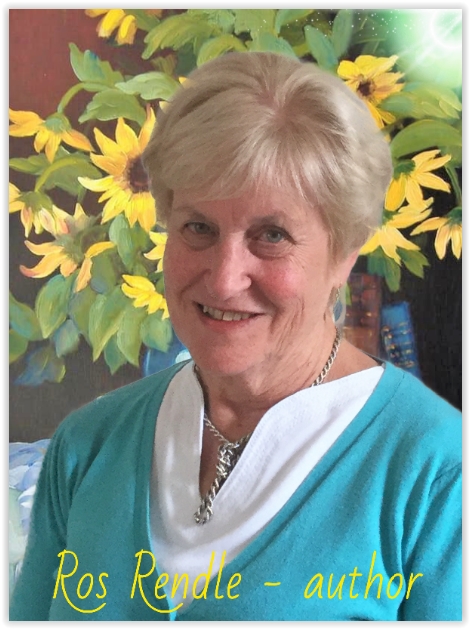
Chatting with Ros Rendle

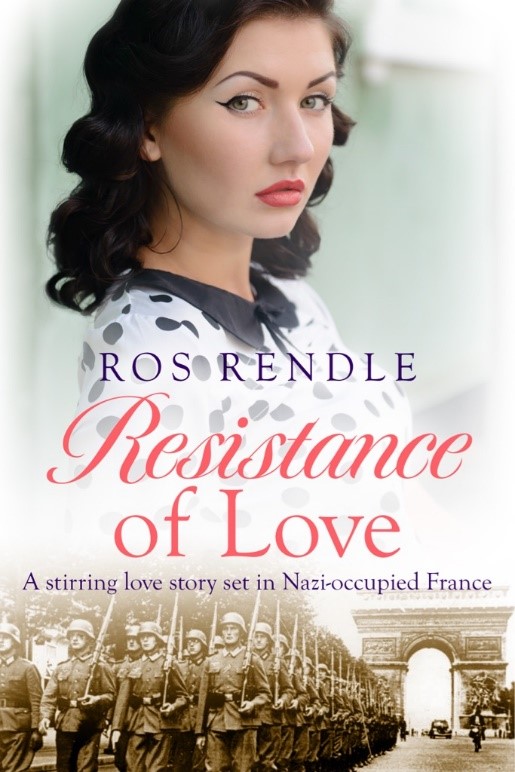
I’m thrilled to welcome Ros Rendle back to the blog to talk about her latest book, Resistance of Love. Make yourself comfortable, Ros, and we’ll begin.

Thank you so much for this opportunity, Natalie. I hope your readers find my answers of interest.

I’ve been waiting for this book, and I certainly wasn’t disappointed. I thought separating the book into parts was an ideal way of seamlessly moving from one timeframe to the next. Was it in the planning or did it just ‘happen’ and is it a method you’ve used before?

I haven’t used ‘parts’ before. A significant number of people asked what happened to Delphi after Book 1 – Sisters At War, and so it seemed necessary to write that. Moving onto the next part of the story lent itself to having a separation and so Part 2 was born. That meant that section was much longer than Part 1, so my publisher and I decided to split it. Thus Part 3 came into being when the story changed its profile a little.

Without wanting to give anything away, Resistance of Love is a generational book. Can your readers expect a sequel?

In a way, this is the sequel. I haven’t planned one for these characters. However, the youngest sister from Sisters At War, her name is Izzy, is about to appear in The Divided Heart. This is set between 1970 when Izzy is elderly, and much is set during the Cold War when she harbors a secret.

You have set me thinking now, though, about the possibilities of writing a sequel more directly about Flora from Resistance of Love. There were some major world events for France during that era.

I know you lived in France for many years and your geographical knowledge is in evidence. Do you think you could have written the same book without that personal experience, using only Google Maps and reference books?

I do use Google and books a lot but having lived in the regions about which I write has enable some more detailed knowledge. We had a V1 ramp and its associated buildings on the edge of our village in northern France and a couple of the elderly residents were able, though reluctant, to speak of the invasion and building of those.

I should not have heard it were in not for the fact we lived there and got to know these residents well.

I learned of the Resistance escape route through Chateau de Chenonceau when we visited, and that information is on Google. However, to tread in the steps of my protagonists is always helpful for those small details. A small example is the dint in the limestone steps where hundreds have trodden before, which lends authority to a story, as does the weight of a dark oak door.

When we were renovating an ancient wall at our house in the Loire region, we found a German coin from 1944. One of our farmer neighbours spoke of when troops were sent there to ‘rest’ and of the strain of living with the enemy and with the culture of being encouraged to inform on each other. I think life in this country must have been dreadful during the war but life in an occupied country was extremely stressful at times.

The drama of Part 3 had me racing through. It certainly brought home to me the fear and terror that people lived through. Did your research include talking to anyone who experienced it first-hand?

One man who was a boy, during those times told me of how his family planned to outrun the Nazis and escape to the ‘Free’ Zone further south. They were half-way down his long driveway in the middle of the night, when the invaders arrived, and they fled back indoors. This story was too good not to use from the time distance we are in now, but the people who lived through it were extremely reluctant to speak in detail, especially about the bullet holes in the wall of the church. I never did get to the bottom of that, and if I had, I wouldn’t have included it.

There was a real sense of family but some of the scenes were very harrowing. Did you find them difficult to write?

The particular scene to which you refer was hard to read about. I discovered a lot more information, through reading and old TV programmes, than I used. The difficult part in writing was to decide what to use and what to leave to the imagination and how best to interpret cold facts and bring them into a personal domain. The balance of these things was testing as I didn’t want to make it too horrific for the genre in which the story resides.

You’ve given us a really interesting cast of characters. Was each meticulously planned beforehand or did some present themselves to you as you were writing? It was really good to see Delphi achieve her happy ever after but for me this is Flora’s book. A brave young woman who did what so many had to at the time.

It became Flora’s book. She took over and got on with what had to be done during the time and place in which she found herself. One or two of the other characters in her sphere became more prominent as I wrote, and the influence of the Great War could not be denied. It had tentacles which influenced long into the future for some, and even for the future families of those who fought in that.

I know your writing covers different time periods. Is there anyone, past or present, who is your own personal hero or heroine and what makes them stand out from the rest?

For the last eight years or so, my husband has befriended, via a local charity, an old man who was suffering from loneliness. Cyril, known as Sid, became a good family friend and often came to our house as well as my husband visiting him far more regularly than the charity suggested, sometimes going in the night when he was called, because Sid had fallen. In 2017, on learning of Sid’s exploits in the Channel and elsewhere during WW2, my husband informed the relevant authorities, and after their research and much form, filling Sid was awarded the Légion d’Honneur by the French President. The letter of thanks and congratulations arrived, and Sid became proud to wear the accompanying medal at our local Remembrance Day services. He had volunteered early to join the navy, going aged only just seventeen, and some of his real-life exploits, I have written in the book.

He died last month, aged 96, and the Royal British Legion played the last post at his funeral. Sid never believed he was a hero … but he was.

There were so many unsung heroes, weren’t there. I’m so glad Sid ultimately received recognition.

Thank you for joining me. It’s been lovely to chat. Let’s do it again some time.

Blurb

Delphi’s peaceful new life is threatened by the spectre of war…
England, 1927
After spending ten years in Australia, Delphi Strong is on a ship back to England with her daughter, Flora.
While on board, Delphi meets Rainier, a charming vineyard owner on his way home to France. Forming an instant mutual attraction, the two share a whirlwind romance before disembarking.
Unable to forget her, Rainier crosses the channel a few months later and asks Delphi to marry him. Equally lovestruck, Delphi accepts, and she and Flora join Rainier in France.
However, their idyllic lifestyle is shattered when war breaks out and the Nazis begin to occupy the country. Forced to flee to the Free Zone in the south, the family must now pull together to resist the enemy…

Can Delphi keep her family safe? Will they find a way to defy the occupying forces?

Or will the brutal new regime destroy their peace forever…?
RESISTANCE OF LOVE is a page-turning romantic saga set in England and France during World War II. It is the second book in The Strong Family Historical Saga series.

To find out more about Ros you might visit her website or join her on Twitter, Instagram or Facebook. She loves to interact with readers.

www.rosrendleauthor.co.uk

www.Twitter.com/Ros_Rendle

www.Facebook.com/RosalindRendleAuthor

www.Instagram.com/Ros_Rendle

Resistance of Love purchase link: https://amzn.to/3EAr2pC